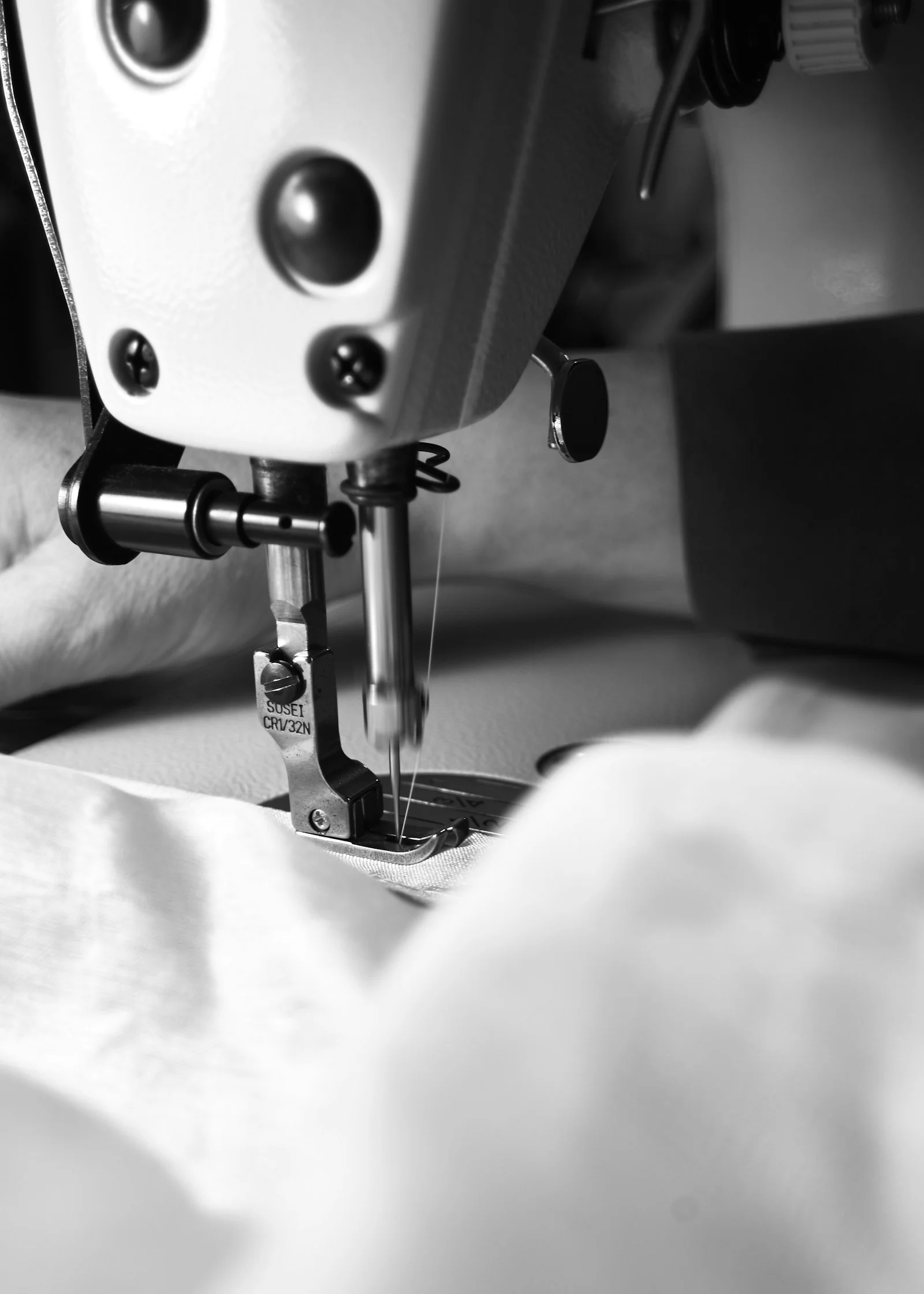
In our London atelier, traditional tailoring techniques are practiced daily. Hand-basting, pad stitching, hand-finished buttonholes—methods that have been refined over centuries are still the foundation of how we work.
But this is not nostalgia for its own sake. We use these techniques because they produce superior results, because they allow for a level of precision and customization that machines cannot replicate, and because they connect us to a lineage of makers who understood that good work takes time.
The Value of Handwork
There is a common misconception that handwork is simply slower or more expensive than machine production, with no meaningful difference in the final product. This is not true.
Garments constructed by hand have a softness and fluidity that machine-made clothing lacks. They conform to the body more naturally, they move more gracefully, and they age more beautifully. The stitches are more secure, the seams more durable, the overall construction more refined.
This is because hand sewing allows for constant adjustment and responsiveness. A skilled maker can feel how the fabric is behaving, can adjust tension and placement in real time, can make micro-corrections that a machine cannot. The result is a garment that feels alive—that has been shaped by human hands and human judgment.
Learning the Craft
Becoming a skilled tailor or seamstress takes years. It requires not just technical knowledge but also a developed sense of touch, an understanding of how different fabrics behave, and the ability to visualize how a flat pattern will translate into a three-dimensional garment.
This expertise cannot be learned from a book or a video. It requires apprenticeship—working alongside experienced makers, observing their techniques, receiving feedback, gradually developing the muscle memory and intuition that characterize true mastery.
In our atelier, we are committed to passing on these skills. We work with experienced tailors who mentor younger makers, ensuring that traditional techniques are not lost but rather adapted and refined for contemporary needs.
Balancing Tradition and Innovation
While we value traditional methods, we are not purists. We use modern tools where they make sense—industrial sewing machines for long straight seams, computer-aided design for pattern development, digital communication for coordinating with clients.
The key is to use technology thoughtfully, in service of quality rather than speed. A machine can sew a seam faster than a person, but it cannot make the judgment calls that determine whether that seam should be slightly curved to follow the body's contours, or whether the tension should be adjusted to accommodate a particular fabric's stretch.
This is where human expertise remains irreplaceable. The best work happens when traditional skills are combined with contemporary tools, when makers have both deep technical knowledge and the freedom to apply it creatively.
The Future of Craft
There is growing interest in traditional crafts, driven partly by dissatisfaction with mass-produced goods and partly by a desire for meaningful work. More people are seeking out apprenticeships, learning to sew, and appreciating the value of handmade objects.
This is encouraging. But for craft to truly thrive, it must be economically viable. Makers must be able to earn a living wage doing skilled work. Consumers must be willing to pay prices that reflect the true cost of quality production. And designers must create systems that support rather than exploit the people who bring their visions to life.
At Veloura, we are committed to this model. We pay our makers fairly, we price our garments honestly, and we are transparent about the time and skill that goes into each piece. This is how we believe fashion should work—not as a race to the bottom, but as a celebration of human creativity and expertise.